A Guide for Meeting Planners
These topics overlap. They are not the same.
This page helps meeting planners decide whether their audience needs a generational lens, a future-of-work lens, or a speaker who can bring both together.
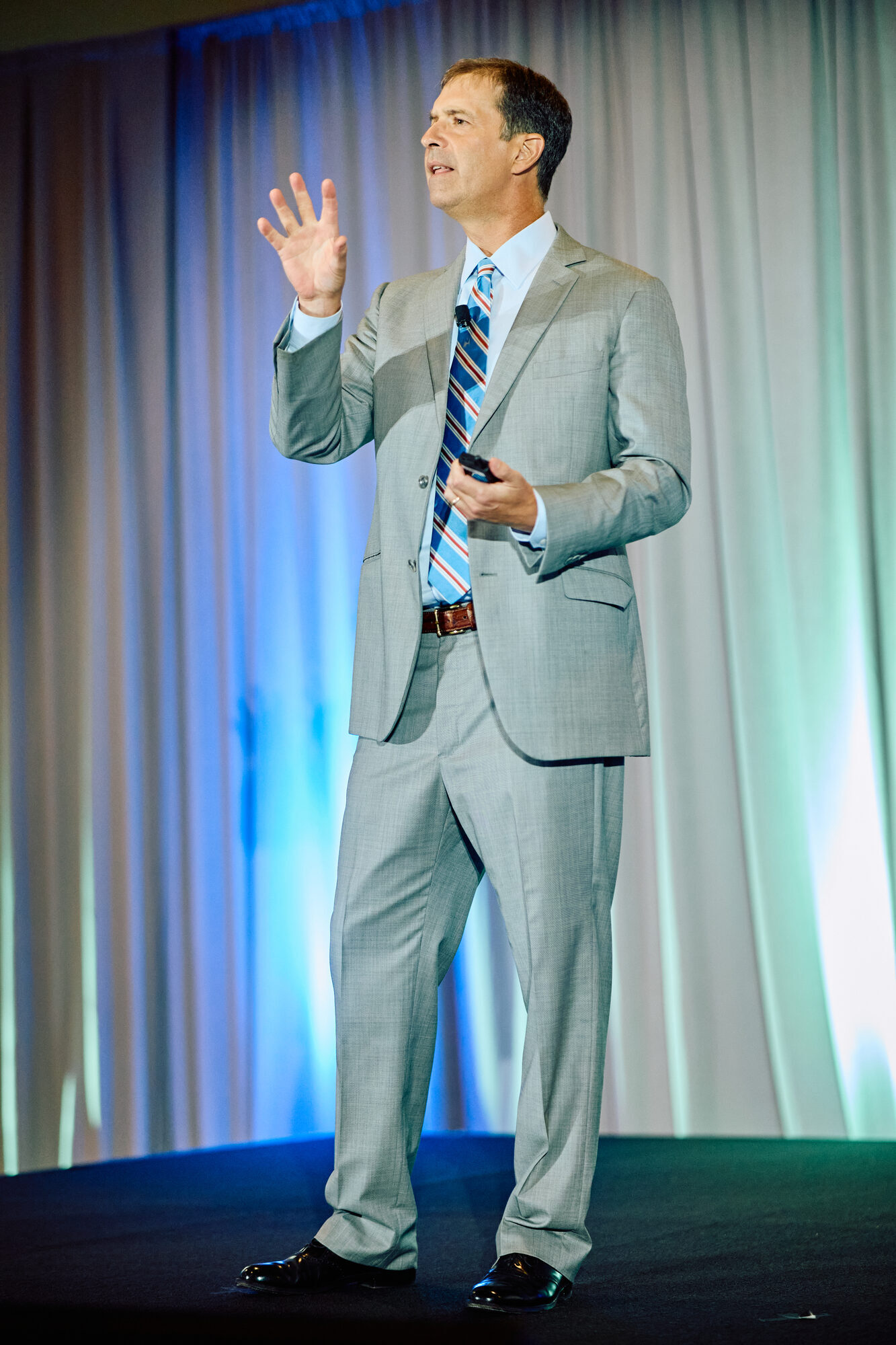
This page helps meeting planners decide whether their audience needs a generational lens, a future-of-work lens, or a speaker who can bring both together.
25+ years • 450 client organizations • 34.2% repeat-client rate • Six books • 402-episode podcast
Generational speakers and future-of-work speakers both get booked to answer some version of "why is this harder than it used to be?" The overlap is real — plenty of workplace friction touches both. But the two categories trace the disruption to different sources, and a speaker who's genuinely strong in one is not automatically strong in the other. Booking the wrong lens for your audience is a common, avoidable mismatch.
| Generational Speaker | Future-of-Work Speaker | |
|---|---|---|
| Core Question | Why do people who came up in different eras see work differently? | How is technology and structure changing how work gets done? |
| What Changed | Formative experiences — economic conditions, parenting styles, when and how each cohort adopted technology | Tools, automation, remote and hybrid structures, AI adoption |
| Typical Content | Communication styles, management expectations, recruiting and retention, client relationships across age groups | Automation strategy, distributed teams, digital transformation, organizational design |
| Best Audience Fit | Managers, HR, sales teams, financial services, associations navigating multigenerational friction | IT and operations leadership, digital-transformation teams, org-design functions |
| Where Cam Fits | Core specialty — 25 years, six books, 450 client organizations | Adjacent, not core — see below |
Your managers say they can't figure out what motivates their younger staff. Your sales or advisory teams are losing younger clients to competitors who communicate differently. Your HR team is fighting turnover it can't explain with pay alone. Your association's audience spans four or five decades of working life and the friction between them is the actual story.
Your organization is mid-transformation — new tools, new structure, new ways of working — and the challenge is adoption and change management, not generational friction. Your audience is IT, operations, or leadership trying to plan for automation and AI at the organizational level, not the interpersonal one.
The honest answer: Cam's core body of work is generational, not future-of-work. He doesn't build automation strategy or organizational-design content, and a planner looking for that should book a specialist in it.
Where the two do intersect in his work is the human side of workplace change — how different generations are actually responding to AI, hybrid work, and the broader uncertainty reshaping how people work. That's the territory covered in his What's Working with Cam Marston podcast, which regularly interviews professionals navigating exactly these shifts, and in his keynote Navigating the Unknown, built around leading confidently when the rules keep changing. Both are generational and leadership content that happens to sit next to future-of-work questions — not a future-of-work keynote wearing a generational label.
Cam delivered as our keynote speaker at our national HR meeting. His insights touched everyone and simply gave all who attended a better understanding of generational differences and nuances. Find your way to wherever he is and listen. You will be better for it.
If your audience's biggest friction is communication, management, recruiting, or client relationships across age groups, that's a generational lens. If the friction is really about tools, automation, or organizational structure, that's future-of-work. Many events land in between — ask what complaint you're actually trying to solve for.
Rarely at equal depth. Most speakers who claim both are strong in one and conversational in the other. The more useful question for a planner is which lens the speaker's actual body of work — books, research, client history — is built on.
Cam's core specialty is generational change, not technical or structural future-of-work topics like automation strategy or org design. But his podcast and keynote content do address how different generations are adopting AI, adapting to hybrid work, and responding to workplace uncertainty — the human and generational side of those shifts, not the technical implementation side.
Contact Cam or his business manager, Helen Broder, through the contact page to check availability and fees for your event date.
Cam's main generational keynote — workplace, leadership, and multigenerational teams.
Learn MoreFor managers and HR leaders who need practical language for a younger workforce.
Learn MoreA planner's guide to evaluating fit, customization, proof, and practical value.
Read the GuideThe evidence planners use to evaluate Cam: experience, client proof, books, and more.
See the Evidence